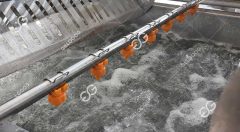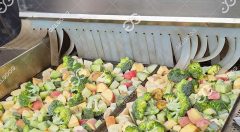
Frozen vegetables are popular in the market due to their convenience, long shelf life, and minimal nutrient loss. Frozen vegetables are produced by rapidly freezing fresh vegetables within a short period of time to preserve their color, texture, nutritional content, and freshness. But how are frozen vegetables processed?
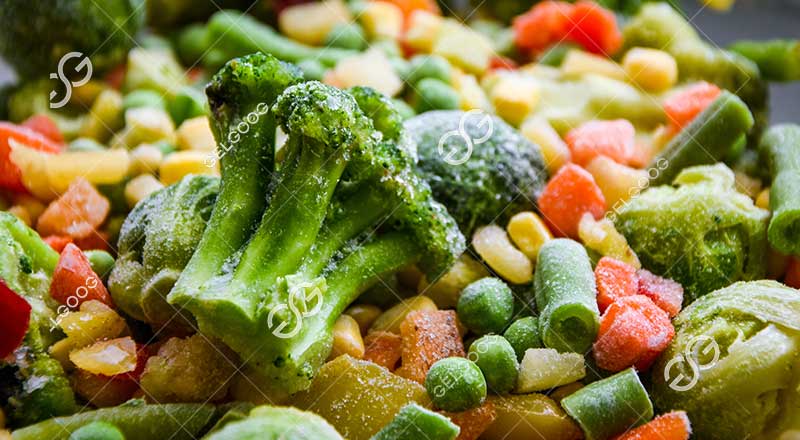
The main processing steps for frozen vegetables
- Select fresh vegetables as raw materials, remove any rotten or damaged parts, and ensure product quality.
- Use a vegetable washing machine to thoroughly remove dirt and impurities from the surface of the vegetables. Some products may require multiple washing stages.
- Cut the vegetables into appropriate sizes and shapes, such as segments, slices, or cubes, to facilitate further processing and consumption.
- Subject the vegetables to a short-term treatment in hot water or steam to inhibit enzyme activity, preserve color, soften fibers, and eliminate some bacteria.
- Vegetables that have been blanched must be cooled quickly to prevent further heating, which can cause a decline in taste and loss of nutrients. Cold water or ice water is typically used for cooling.
- Place the vegetables in a quick-freezing machine and rapidly lower the temperature to below -18°C to form small ice crystals, thereby maximizing the preservation of the vegetable’s tissue structure and nutrients.
Freezing machines are indispensable equipment in the processing of frozen vegetables. Their function is to reduce the core temperature of vegetables to -18°C or lower in a very short time to ensure:
- Maximum retention of nutrients and natural flavor in vegetables.
- Minimization of cell structure damage, ensuring good texture after thawing.
- Prevention of large ice crystal formation, avoiding moisture loss inside vegetables.
- Improved production efficiency and reduced energy consumption.
In the production process of frozen vegetables, the following points should be noted:
- Control of blanching time: If the time is too short, it cannot effectively inhibit enzyme activity; if it is too long, it may lead to nutrient loss and tissue softening.
- Control of freezing time: If the time is too long, it will reduce production efficiency; if it is insufficient, the core temperature will not meet requirements, affecting product storage performance.
- Packaging materials should have good gas barrier properties and low-temperature resistance to prevent moisture absorption, freezing, or oxidation during transportation and storage.
Klik untuk memberi peringkat pada postingan ini!
[Tertawa] Total: 0 Rata-rata: 0]