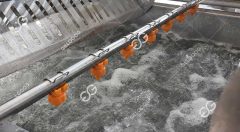
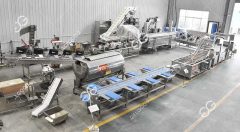
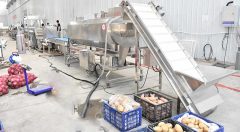
Potato chips are a crispy snack made using a complete set of specialized potato chips machine. These equipment mainly includes: potato washing machines, potato slicing machines, potato slices blanching machines, frying machines, and centrifugal oil extraction machines. So how do potato chip machines work? Each part operates differently; below we will explain how each machine works.
Potato washing machines
It is used to remove mud, impurities, and skin from the surface of potatoes. The potatoes are continuously tumbled and rubbed by the rotating rollers and the flowing water, achieving surface cleaning and peeling.
Potato slicing machine
A potato slicer is used to cut potatoes into uniform thin slices. When potatoes enter the slicer, they pass through the feed hopper into the rotating blade area. The blade rotates at high speed, and the potatoes are pressed tightly against the blade surface under centrifugal force, while the cutter quickly slices them into thin slices of uniform thickness.
Potato slice blanching machine
A blanching machine is used to remove excess starch, maintain the color of potato chips, and improve their texture. It briefly blanchs potato chips in hot water at approximately 80-90℃. After blanching, the potato chips are typically transferred to a cooling device for rapid cooling to prevent overcooking.
Frying machine
It is used to fry blanched potato slices into crispy potato chips. The potato slices are conveyed into the frying tank via a mesh belt and heated evenly in cooking oil at 160-180℃, causing the moisture to evaporate quickly and creating a crispy texture. The frying time is usually 1.5-3 minutes, but the actual frying time needs to be adjusted according to the thickness of the potato chips.
Centrifugal oil remover
It is used to remove excess oil from the surface of potato chips, improving taste and extending shelf life. It uses high-speed centrifugal force to fling oil off the surface of the chips and allow it to flow into an oil collection tank.
In addition to the steps mentioned above, additional equipment such as seasoning machines, packaging machines, and metal detection equipment can be added depending on production requirements. If you would like to learn more about the detailed workflow, please request a video from us.