
La ultracongelación es un proceso común en el procesamiento moderno de alimentos, ampliamente aplicado a productos como frutas, verduras, carne y productos acuáticos. Artículos como fresas, mangos, guisantes, maíz, patatas fritas y pollo ultracongelados dependen de este proceso de congelación para prolongar su vida útil y facilitar el transporte.
En comparación con la congelación convencional, la congelación rápida pone mayor énfasis en la velocidad de congelación, el tamaño de los cristales de hielo y la calidad final del producto. Entonces, ¿cuál es el propósito de la congelación y qué problemas resuelve exactamente?
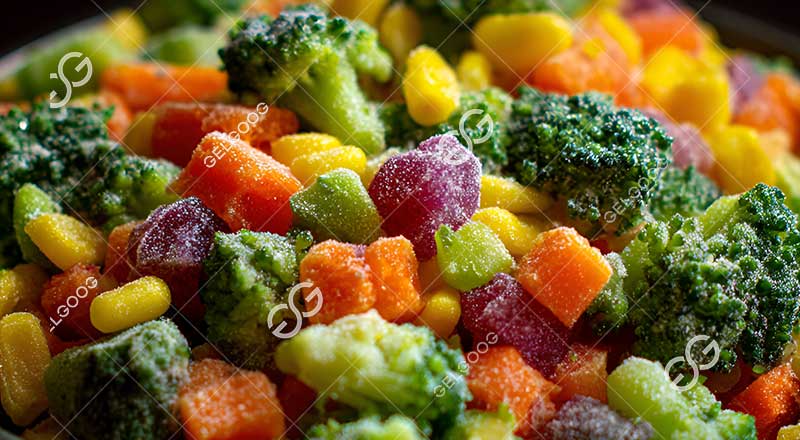
1. ¿Qué es la ultracongelación?
La ultracongelación se refiere al proceso de reducir rápidamente la temperatura de los alimentos en un corto período de tiempo, provocando que la humedad del interior forme rápidamente cristales de hielo y reduciendo la temperatura central del producto hasta un nivel de congelación específico.
En el procesamiento de alimentos, la ultracongelación suele seguir a pasos preliminares como el lavado, el corte, el blanqueo, la fritura o la cocción al vapor. Por ejemplo, las verduras destinadas a la ultracongelación pueden someterse a lavado, corte, blanqueo y enfriamiento antes de entrar en la fase de congelación, mientras que las frutas pueden congelarse directamente después del lavado, pelado y corte.
2. ¿Cuál es el propósito principal de la ultracongelación?
Ampliar la vida útil de los alimentos
A temperatura ambiente, los alimentos son susceptibles a factores como la proliferación microbiana, la actividad enzimática y la oxidación; con el tiempo, esto puede provocar su deterioro, pérdida de color y el desarrollo de sabores desagradables.
La ultracongelación reduce rápidamente la temperatura del producto, inhibiendo significativamente el crecimiento y la reproducción microbiana a la vez que ralentiza diversas reacciones químicas y biológicas. En consecuencia, los alimentos pueden conservarse durante más tiempo en estado congelado, lo que facilita la gestión de inventarios, el transporte a larga distancia y el suministro estacional para las empresas.
Preserva la calidad original del alimento tanto como sea posible
Durante el proceso de congelación, el contenido de agua en los alimentos forma cristales de hielo. Si la velocidad de congelación es lenta, estos cristales tienden a crecer más, lo que causa daños significativos en la estructura celular del alimento. Al descongelar, esto puede provocar problemas como la pérdida de jugo, el ablandamiento de los tejidos y una disminución en la textura y la sensación en boca.
La congelación rápida minimiza el tiempo que el alimento pasa atravesando la zona de máxima formación de cristales de hielo; esto da como resultado cristales de hielo más pequeños y distribuidos de manera más uniforme, reduciendo así el impacto en la integridad estructural del producto.
Reducción de la pérdida de humedad
Durante el almacenamiento y el procesamiento, un control inadecuado de la temperatura puede provocar la migración de la humedad y la deshidratación del producto.
La congelación rápida estabiliza rápidamente el estado de la humedad dentro del alimento y minimiza la formación de grandes cristales de hielo, ayudando así a reducir la pérdida por goteo durante la descongelación.
Preservando el color, el sabor y el valor nutricional
Muchas frutas y verduras son propensas a la oxidación y a las reacciones enzimáticas durante su procesamiento, lo que provoca pardeamiento, oscurecimiento y cambios de sabor.
En la producción industrial, algunos productos se someten a pasos como el escaldado y el enfriamiento antes de la ultracongelación. El escaldado reduce la actividad de ciertas enzimas, mientras que el posterior enfriamiento rápido y la ultracongelación reducen aún más la temperatura del producto, ayudando así a estabilizar su calidad.
3. ¿Por qué los diferentes tipos de alimentos requieren ultracongelación?
Aunque la tecnología de ultracongelación se puede aplicar a diversos alimentos, los objetivos específicos y los requisitos de procesamiento difieren.
Frutas ultracongeladas: El enfoque principal es el color, la forma, la estructura celular y la textura después de la descongelación; los productos comunes incluyen mangos, fresas y arándanos ultracongelados.
Verduras ultracongeladas: el procesamiento suele implicar una combinación de Blanqueo, enfriamiento y ultracongelación, centrándose en el control del color, la textura y los niveles microbianos; los productos comunes incluyen guisantes ultracongelados, granos de maíz, zanahorias y judías verdes.
Carne ultracongelada: Esto se utiliza principalmente para prolongar la vida útil preservando al mismo tiempo la estructura tisular, el color y la calidad de la carne tanto como sea posible.
4. Equipos de ultracongelación industrial comunes
En la producción industrial, la ultracongelación se realiza típicamente utilizando máquinas de ultracongelación especializadas en lugar de una simple congelación en cámaras frigoríficas estándar.
Máquinas de ultracongelación extraer rápidamente el calor de los productos alimenticios —utilizando aire frío forzado u otros métodos de refrigeración—, permitiendo que los productos alcancen la temperatura objetivo en un corto período de tiempo.
Los tipos comunes de equipos de ultracongelación industrial incluyen:
- Congeladores rápidos de lecho fluido
- Túneles de congelación rápida
- Congeladores rápidos en espiral