
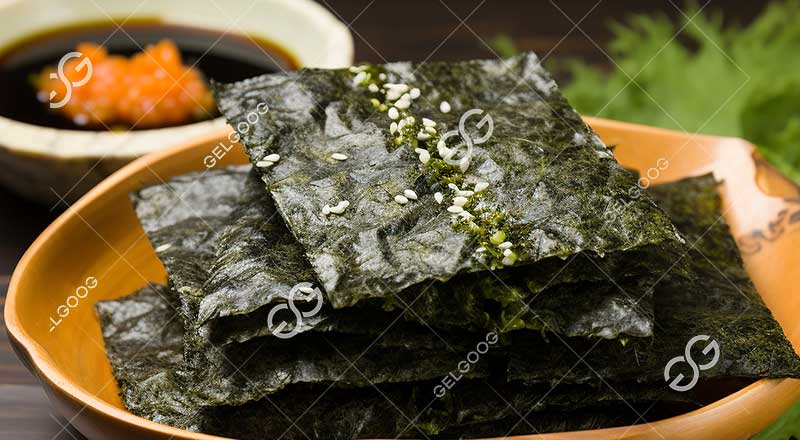
Frying is a crucial step in the seaweed processing process, achieving its crispy texture. Controlling the seaweed frying temperature is a key factor in determining the product’s taste and quality. Generally, seaweed is fried within a temperature range of 150-175°C. This allows the seaweed to quickly dehydrate, achieving a crispy texture while avoiding the darkening, bitterness, and loss of nutrients that can occur with high temperatures.
The significance of oil frying temperature control:
- Ensuring a crispy texture: The appropriate oil temperature allows seaweed to quickly set its shape, forming a uniform crispy layer on the surface while rapidly evaporating internal moisture, thereby maintaining a light and crispy texture.
- Preventing burning: When the oil temperature exceeds 180°c, the surface of the seaweed is highly prone to burning, which not only affects its color but also introduces a bitter taste, thereby reducing the eating experience.
- Preserving flavor and nutrition: Seaweed contains a certain amount of unsaturated fatty acids, proteins, and trace elements. Excessively high temperatures can cause these components to be destroyed.
Frying temperatures for different types of seaweed:
Seaweed products come in various forms during processing, and the optimal frying temperatures may vary depending on the product:
- Seaweed sheets (thin slices): 150–160°C, short frying time (typically 5–10 seconds), to avoid becoming overly crispy and brittle.
- Seaweed rolls (thicker): 160–170°C, requiring a slightly longer frying time to ensure the interior is crispy.
Important Considerations for the Frying Process:
- Oil Temperature Stability: The ماكينة القلي should be equipped with a precise temperature control system to ensure that the oil temperature fluctuates by no more than ±2°C throughout the process. Unstable oil temperature can lead to inconsistent product color and texture.
- Oil Quality: Use high-temperature resistant, oxidation-stable edible oil, and regularly filter and replenish the oil to prevent oil degradation and off-flavors.
- Batch Size Control: Adding too much seaweed at once can cause the oil temperature to drop suddenly, affecting frying results. Batch sizes should be adjusted according to the equipment’s production capacity.
- Oil Drainage: After frying, the product must undergo rapid oil drainage using an oil drainage machine. This not only reduces oil content but also maintains crispiness and extends shelf life.
In the production process of fried seaweed, a frying temperature of 150-175°C is the key to achieving the ideal crispy texture. Different types of seaweed should have their oil temperature and frying time adjusted flexibly based on thickness, moisture content, and seasoning.