
With the rapid growth of the health food market, consumers are increasingly focusing on products that are natural, nutritious, low in oil, and of high quality. Vacuum frying technology has emerged as a key process in the fruit and vegetable processing industry, finding widespread application in the production of fruit and vegetable chips.
Compared to traditional frying methods, vacuum frying offers lower processing temperatures, superior quality retention, and higher product added value, making it increasingly popular among food processing companies. So, what are the advantages of vacuum frying?
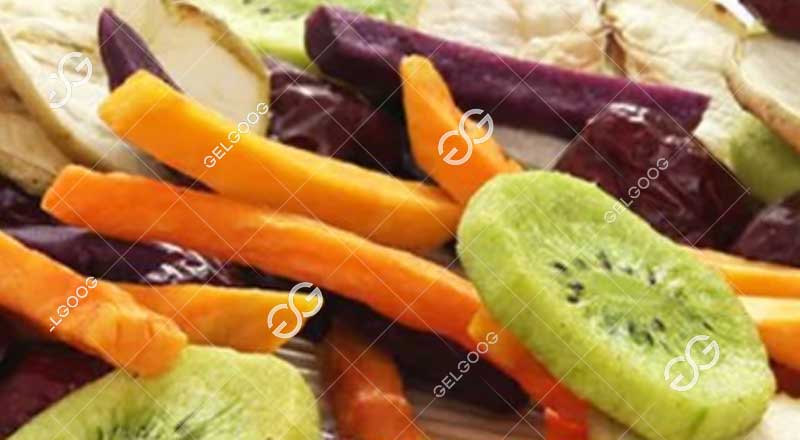
1. Better preservation of natural color
Conventional frying typically requires high temperatures ranging from 160°C to 180°C. Under such high heat, the natural pigments in food are prone to oxidation or browning, causing the product’s color to darken or even turn black.
In contrast, vacuum frying takes place in a reduced-pressure environment, with oil temperatures generally controlled between 80°C and 120°C. This lower temperature effectively minimizes the degradation of natural pigments—such as chlorophyll, anthocyanins, and carotenoids—allowing the product to retain a natural color closely resembling that of fresh fruits or vegetables.
2. Better preservation of natural flavor
High-temperature frying tends to cause the aromatic compounds in fruit to volatilize, thereby affecting the product’s flavor.
In a vacuum environment, the low oxygen content minimizes the loss of volatile aromatic compounds, allowing the natural aroma of the fruits and vegetables to be preserved to the greatest extent possible.
3. Better preservation of nutrients
Fruits and vegetables are rich in vitamins, minerals, and natural antioxidants, yet these nutrients are often highly sensitive to high temperatures.
Thanks to lower processing temperatures, vacuum frying effectively minimizes the loss of these nutrients.
4. Reducing oil oxidation and enhancing product quality
During conventional frying, cooking oil is subjected to high temperatures for extended periods, making it prone to oxidation and degradation; this not only affects the product’s flavor but also shortens the oil’s service life. In contrast, vacuum frying operates at lower temperatures and in an environment with minimal oxygen, thereby significantly slowing the rate of oil oxidation.
5. The product has a relatively low oil content.
Vacuum frying equipment is typically equipped with a high-speed oil removal system; immediately after frying, the product undergoes a centrifugal oil removal process.
High-speed rotation rapidly removes excess surface oil, resulting in a final product with significantly lower oil content compared to conventionally fried foods.
Thanks to advantages such as excellent color retention, minimal nutrient loss, a crisp texture, and lower oil content, vacuum frying technology has become a key area of development in the deep processing of fruits and vegetables. An increasing number of fruits and vegetables are being processed using this method to enhance product value and meet consumer demand for healthy snacks.
Common vacuum-fried products currently available include:
Okra, pumpkin, banana, jackfruit, apple, pineapple, mango, durian, purple sweet potato, carrot, shiitake mushroom, etc.