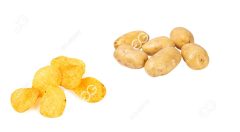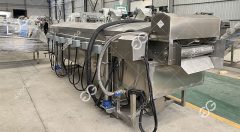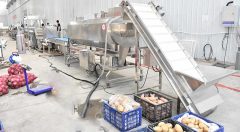
Potato cleaning is a crucial step in the potato chips production process, crucial for both slicing and frying hygiene and product quality. As a root crop, potatoes often come into direct contact with soil during their growth. Therefore, before entering the processing line, they must be thoroughly cleaned to remove any dirt and impurities adhering to their surfaces. So, how are potatoes cleaned before being made into chips?
In modern potato chips factory, a common method is to use a brush washer. This equipment is designed for root vegetables, especially potatoes, sweet potatoes, carrots and other raw materials for cleaning and preliminary peeling.
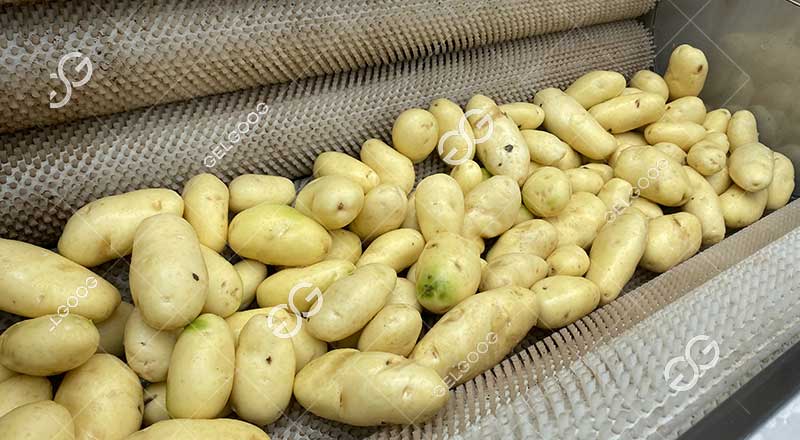
The brush washer’s main components include a cleaning drum, nylon brushes, a spray system, a transmission system, and a wastewater discharge device.
The working principle is as follows:
- Potatoes are transported via an elevator into the drum of the washer.
- The drum is equipped with multiple sets of rotating brushes, which continuously rub the surface of the potatoes as they rotate.
- A spray pipe at the top continuously sprays clean water to rinse the surface of the potatoes.
- The combined action of the brushes and the spray water thoroughly removes mud, sand, and impurities.
- The cleaned potatoes are then transported to the next process through the discharge port.
This cleaning method offers significant advantages over traditional manual cleaning:
- High efficiency: Continuous operation is possible, processing outputs ranging from several hundred kilograms to several tons per hour.
- Uniform cleaning: 360° scrubbing ensures every potato is clean.
- Water and energy saving: The spray system utilizes a circulating water filter, significantly reducing water consumption.
Cleaning process:
- Raw Material Pre-screening: Removes undersized or rotten potatoes to ensure efficient cleaning.
- Preliminary Rinse: Loosens surface dirt using a water trough.
- Brush Cleaning: Thoroughly cleans using a combination of brush abrasion and high-pressure spray.
- Rinsing and Transfer: Rinses again in a rinse trough to remove any remaining impurities.
Cleaning precautions:
- Control water temperature and pressure: Excessive water pressure may damage the surface, while low water pressure may result in incomplete cleaning. Generally, spraying with room-temperature water is sufficient.
- Brush material: Soft, durable nylon brushes are typically used, as they effectively remove dirt without damaging the surface.
- Regular equipment maintenance: Check brush wear to maintain optimal cleaning results.