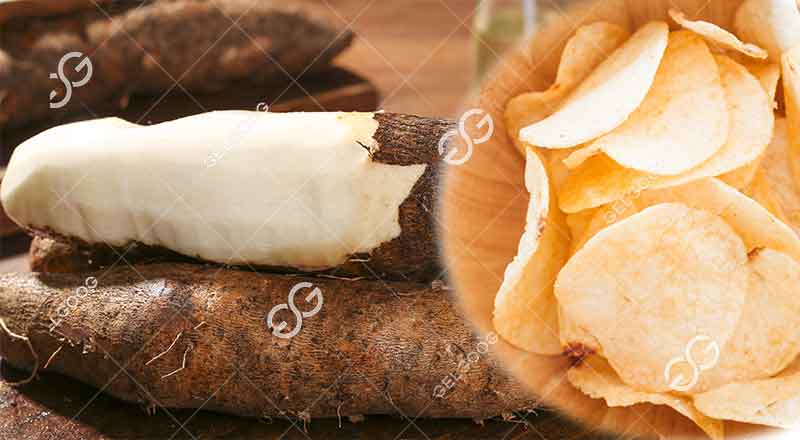
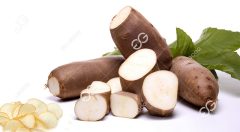
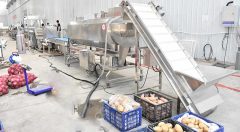
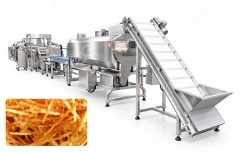
Due to its high starch content, cassava can be processed—through slicing, rinsing, dehydrating, and deep-frying—into crispy cassava chips, which are a very popular snack. So, how are cassava chips production process?
The typical production process for cassava chips includes raw material handling, washing and peeling, slicing, rinsing, dewatering, frying, deoiling, seasoning, and packaging.
Raw Material Selection and Conveying
Fresh cassava is first screened to remove any roots that are rotten, deteriorated, or otherwise unsuitable for processing.
Washing and Peeling
Fresh cassava roots are typically covered in soil, sand, and other debris, and feature a thick outer skin; therefore, they must undergo thorough washing and peeling.
Slicing
Slicing is a critical step that determines the appearance and texture of the final product. The cassava is passed through an automatic slicer, which cuts it into thin, uniform slices.
Rinsing and Draining
After slicing, the cassava slices may have excess starch and small fragments adhering to their surfaces. Rinsing removes this surface starch and any impurities generated during processing, helping to ensure the quality of the final product.
Dewatering
If too much moisture remains on the surface of the cassava slices, introducing them directly into the fryer can cause fluctuations in oil temperature and extend the required frying time. Consequently, a centrifugal dewatering machine or a vibrating drainage unit is used to remove surface moisture.
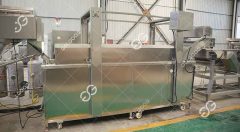
Continuous Frying
Frying is the critical step that determines the final texture and color of the cassava chips. After dehydration, the cassava chips enter the fryer, where they are fried at a controlled temperature for a specific duration. This process allows the internal moisture to evaporate, resulting in a crispy texture.
De-oiling and Cooling
Once frying is complete, a certain amount of cooking oil remains on the surface of the cassava chips. Excess oil is removed using a vibrating de-oiler or a centrifugal de-oiling machine.
Seasoning and Packaging
Depending on market demand, seasonings such as salt, chili powder, or barbecue seasoning can be applied to the cassava chips. An automatic rotary seasoning machine ensures that the seasonings are distributed evenly across the chips, promoting flavor consistency across different production batches.
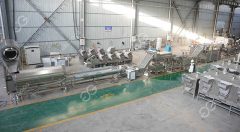
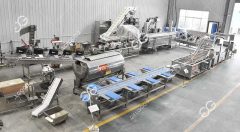
Establishing an efficient cassava chips production plant requires not only the selection of reliable equipment but also careful consideration of how the various processing stages integrate with one another. An ill-conceived equipment configuration can lead to reduced production efficiency, raw material waste, and inconsistent product quality.
As a manufacturer of food processing equipment, we can provide customized solutions tailored to the specific production requirements of your cassava chips processing plant.